
What Is a President’s Club Trip?
A President’s Club trip is not a company vacation with better branding, though it’s easy to see why people mix the two up. It’s a formal recognition program, usually reserved for the small percentage of employees, most commonly in sales, who hit a defined performance bar over a defined period. The reward is a trip, often several days at a premium destination, built around recognition dinners, executive access, and activities designed to feel unmistakably elevated compared to a standard company retreat. Qualification is typically tied to quota attainment, revenue generated, net new logos closed, or renewal and expansion numbers, though some organizations extend eligibility to top performers in customer success, marketing, or other revenue-adjacent functions.
What separates a President’s Club trip from a general offsite is the exclusivity and the symbolism attached to it. Being invited means something specific happened. You were measured against your peers on a clear standard, and you came out ahead.
That’s a different psychological contract than “everyone at the company gets to go somewhere nice this year.” The trip works because it is scarce, and scarcity is what makes the recognition land.
Camunda’s Eve Plumridge put it simply when describing the company’s first-ever President’s Club:
the goal wasn’t to deliver “a luxury vacation,” but “a formal recognition program that signals elite achievement and reinforces the behaviors the company wants to reward.”
Eve Plumridge
Why Companies Offer President’s Club Trips
The business case for a President’s Club program rests on a few overlapping goals: reward top performers, motivate the rest of the team to chase the same bar next year, and build enough loyalty among your best people that competitors have a harder time poaching them. There’s also a quieter, longer-term effect. When a company consistently delivers on a well-run incentive program, it becomes part of the pitch during recruiting, and it becomes a story people tell each other internally. That’s exactly what happened at Camunda after its first India trip. Eve described colleagues who weren’t even on the trip stopping her to say they’d heard about it and wanted in next year. The program had, in her words, started to “build its own kind of status within the company.”
None of that happens automatically just because a company spends money on flights and hotel rooms. The trip has to be tied to the actual goals the business cares about that year, or it starts to feel disconnected from reality, a nice gesture that doesn’t reinforce anything in particular. This is one of the more common failure points: leadership approves a corporate retreat costs line item for President’s Club without first agreeing on what the program is supposed to change. If a company can’t articulate what winning looks like before the trip is booked, the incentive tends to lose its edge by the time qualifiers are announced.
Recent industry data backs up why this investment keeps growing even in tighter budget years. According to the SITE Global overview of the 2025 Incentive Travel Index, average per-person spend on incentive travel programs reached $5,100 in 2025, up 4% year over year. The top-tier programs, the President’s Club-caliber trips, averaged closer to $9,000 per person according to GoGather’s ROI research. That gap between average and top-tier spend tells its own story: companies are willing to pay a real premium specifically for the recognition-driven trips, not the broad-participation ones.
Who Qualifies for a President’s Club Trip?
Qualification is where trust either gets built or gets quietly eroded, and it deserves more attention than most companies give it. There are a handful of common models, each with real tradeoffs rather than an obvious “best” answer.
| Qualification Model | Best For | Considerations |
| Top 10% of performers | Competitive sales teams | Simple to explain, but can favor reps with larger or richer territories |
| 100%+ quota attainment | Goal-based cultures | Only fair if quotas themselves were set fairly across the team |
| Revenue ranking | Direct sales teams | Tends to disadvantage newer reps still ramping |
| Growth-based qualification | Expanding teams | Rewards improvement rather than raw size, which can feel more equitable |
| Hybrid model | Complex organizations | More equitable overall, but harder to communicate cleanly |
The single most important retreat survey questions-style discipline here is asking your own team, before finalizing criteria, what they think a fair bar looks like, and then asking again after the trip what actually felt fair in hindsight. A rule that looks airtight on a spreadsheet can still feel arbitrary to someone who missed the cutoff by one deal that closed a week late. Whatever model a company chooses, the criteria need to be locked and communicated before the performance period starts, not adjusted afterward to fit whoever leadership wants to reward. Changing the rules retroactively, even with good intentions, is one of the fastest ways to convert an incentive into a source of internal cynicism.
From venue sourcing to booking the best deal, we've got you covered.
Get free expert guidanceHow to Set Fair President’s Club Qualification Criteria
Fairness isn’t a soft consideration bolted onto the business logic. It’s the mechanism that makes the incentive actually work. If a team doesn’t believe the rules are real, credible, and applied consistently, the motivational effect collapses no matter how nice the destination is. Setting criteria well means deciding early how you’ll handle territory differences, new hires who joined mid-year, promotions and role changes, parental or medical leave, and managers whose eligibility might depend on team performance rather than individual numbers. It also means looping in finance and HR early, since qualification thresholds often intersect with compensation plans, and any ambiguity there tends to surface as a dispute right when qualifiers are being announced, which is the worst possible time to discover a gap in the rules.
A good gut check is to imagine explaining the criteria to the one person on the team most likely to feel shortchanged by them, and seeing whether the explanation still holds up. If it doesn’t, the rules probably need another pass before they go out. This is also where accessibility deserves a first look, not an afterthought: an accessibility checklist covering mobility needs, dietary requirements, and travel documentation should be part of the qualification communication itself, so nobody discovers late in the process that the reward wasn’t actually built with them in mind.
President’s Club Trip Planning Timeline
Treat the planning calendar as seriously as the guest list. A rushed President’s Club trip tends to show up in small but noticeable ways: a hotel room block that couldn’t hold everyone at the same property, an agenda that leaves no breathing room, activities booked too late to get the good time slots.
| Timing | Planning Tasks |
| 12+ months before | Set goals, budget, destination shortlist, qualification rules |
| 9–12 months before | Select destination, secure hotel room block, estimate travel costs |
| 6–9 months before | Plan activities, recognition events, guest policy, branding |
| 3–6 months before | Confirm qualifiers, collect travel details, finalize agenda |
| 1–3 months before | Send communications, confirm flights, finalize menus and logistics |
| Event month | Manage onsite experience, recognition, contingency plans |
| After trip | Gather feedback, measure impact, document improvements |
Camunda’s own experience is a useful counterpoint here. Eve mentioned that the company once pulled together an entire company kickoff for over 500 people in roughly three months, an unusually tight window that, by her account, worked out but was “a very interesting experience.” That’s a fair description of what a compressed timeline generally produces. It can be pulled off, but with more improvisation and risk than a team should want to repeat every year. A President’s Club trip, given how much of its value rides on qualifiers feeling genuinely celebrated rather than shuffled through a rushed itinerary, benefits enormously from the longer runway.
How to Choose a President’s Club Trip Destination
Destination decisions should follow the goals and the qualification rules, not the other way around. Picking a dream location first and then reverse-engineering a budget and eligibility list to fit it is one of the more common mistakes on the “Common Mistakes” list later in this guide. Beyond the obvious budget constraint, it’s worth weighing flight access and total travel time for the group, passport or visa requirements, seasonality, hotel quality and whether a single property can hold the whole group, and how the destination will read for spouses, partners, or other guests who may be joining.
Eve’s account of choosing India’s Golden Triangle for Camunda’s first President’s Club is a good illustration of destination selection done through relationships rather than guesswork. Rather than starting from a shortlist of typical luxury destinations, she said she “utilized my network,” talking to colleagues who had experienced other companies’ President’s Club programs to learn what worked, what didn’t, and where people wished they’d never gone again. That research led the team toward something “slightly outside of the norm,” landing on Delhi, Agra, and Jaipur for a five-day trip: two travel days bookending three days of programming. The lesson generalizes well beyond India specifically. A destination chosen because it fits the company’s actual culture and appetite for adventure tends to outperform one chosen purely because it appears on every other company’s shortlist.
Beach and resort destinations: Caribbean resorts, Mexico, Hawaii, coastal California, Florida. These suit companies prioritizing relaxation and guest-friendly amenities.
Mountain and outdoor destinations: Colorado, Utah, Lake Tahoe, the Canadian Rockies, the Swiss Alps. These work well for teams that want scenery and adventure built into the agenda.
City-based trips: New York, Las Vegas, Miami, London, Paris, Barcelona. These lean into dining, culture, and stronger executive programming.
Luxury international incentive trips: Italy, Greece, Portugal, Costa Rica, Japan, and similar destinations. These tend to suit established programs with bigger budgets and more experienced planning teams behind them.
Whatever the shortlist, destination choices should be revisited against current travel conditions, cost, and company policy rather than locked in based on last year’s assumptions.
What to Include in a President’s Club Trip
The strongest programs balance structure with genuinely free time, because both matter for different reasons. A welcome reception, an executive-hosted dinner, an awards ceremony, and a handful of group excursions give the trip its shape and its recognition moments. But some of the most valuable connection tends to happen in the unscheduled hours, which is exactly the moment Eve pointed to as proof that Camunda’s first President’s Club had worked. On the final day in Jaipur, with most flights not until evening, the group chat lit up with people organizing their own three-hour lunch together rather than filling free time separately. “People with their partners or their plus ones,” she said, “to have the opportunity to have free time and yet choose to spend that time with these people” was the moment she and Camunda’s CRO realized the trip had actually landed. Over-programming an itinerary can crowd out exactly that kind of moment, worth remembering when the instinct is to fill every hour with another activity.
Sample President’s Club Trip Itinerary
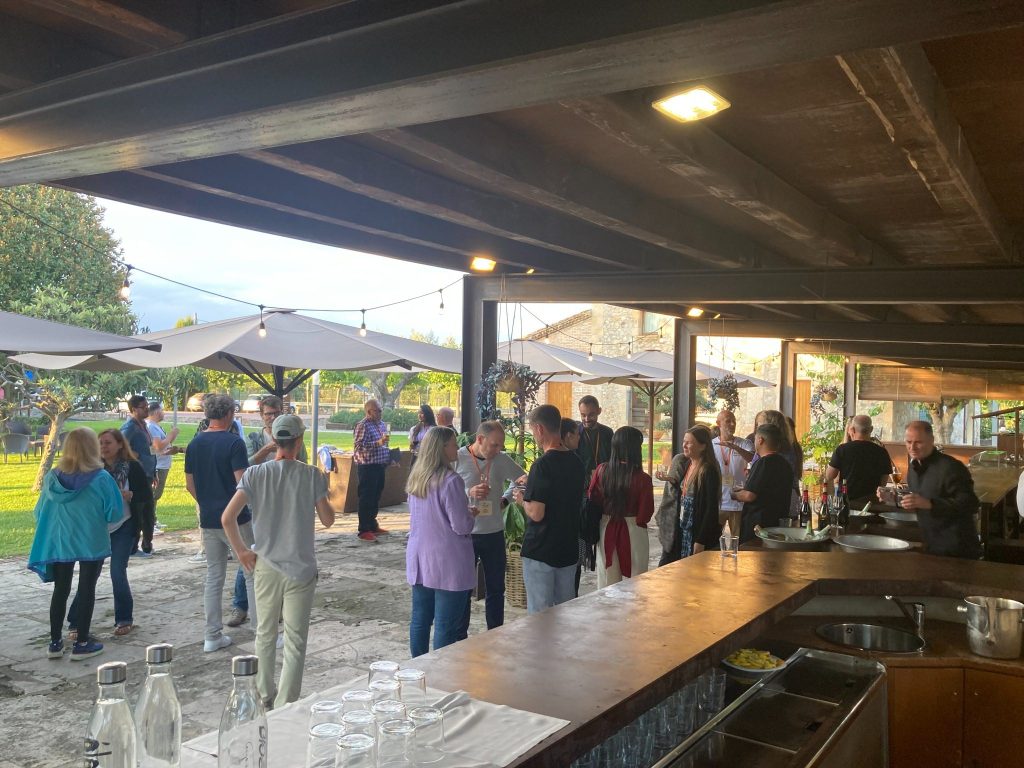
Three-day itinerary
| Day | Example Agenda |
| Day 1 | Arrivals, welcome gifts, opening reception, casual executive dinner |
| Day 2 | Morning leisure or optional activity, afternoon group experience, awards dinner |
| Day 3 | Free time, optional spa/golf/excursion, closing celebration |
| Day 4 | Departures |
Four-day itinerary
| Day | Example Agenda |
| Day 1 | Arrivals, hospitality desk, welcome reception |
| Day 2 | Group excursion, leadership lunch, free evening |
| Day 3 | Optional activities, guest experiences, awards gala |
| Day 4 | Free morning, closing event, departures next day or evening |
The best itineraries leave real room for rest, guest enjoyment, and informal relationship-building rather than treating every hour as programming inventory to fill.
President’s Club Trip Activities
Recognition activities: awards dinner, executive toast, personalized winner introductions, achievement videos, peer recognition moments, gift presentations.
Relaxation activities: spa experiences, beach time, resort amenities, wellness sessions, private cabanas.
Adventure activities: sailing, hiking, ziplining, ATV tours, skiing, snorkeling, golf, hot air balloon rides.
Cultural and culinary activities: private food tours, wine tastings, cooking classes, museum or architecture tours, local performances.
Leadership and networking activities: executive breakfast, fireside chat, small-group dinners, informal networking, future-leader roundtables.
How Much Does a President’s Club Trip Cost?
Corporate retreat costs for a President’s Club program depend on the number of qualifiers and guests, destination, flight distance, hotel category, room block size, meals and beverages, activities, the awards dinner or gala, gifts, ground transportation, event production, branding, travel insurance, onsite staff, and a contingency line that should never be treated as optional. As the SITE Global data referenced earlier shows, top-tier programs are now averaging around $9,000 per person, more than double the spend on broad-participation trips, according to GoGather’s incentive travel ROI data. That gap reflects a real strategic choice companies are making: fewer people, higher spend per person, and a correspondingly higher bar for what the trip needs to deliver.
It’s worth resisting the temptation to promise a specific number before the destination and headcount are locked. A far more useful exercise is walking through what actually drives cost, and budgeting against that rather than an arbitrary round figure pulled from a competitor’s program.
President’s Club Trip Budget Template
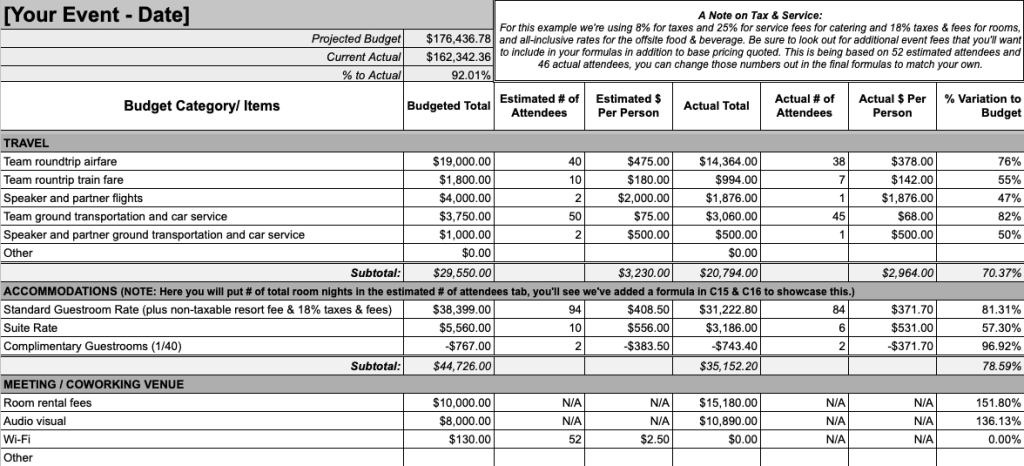
| Budget Category | Notes |
| Flights | Include qualifiers, guests, executives, and staff |
| Hotel | Room rate, taxes, resort fees, upgrades |
| Food and beverage | Receptions, dinners, breakfasts, private events |
| Activities | Group excursions, optional experiences, guest activities |
| Transportation | Airport transfers, shuttles, private cars |
| Awards and gifts | Trophies, welcome gifts, corporate retreat gifts |
| Event production | AV, staging, photography, décor |
| Planning and staffing | Agency, onsite support, travel desk |
| Contingency | Weather, delays, rebooking, emergencies |
If a company is comparing multiple destinations or properties at this stage, it helps to request formal venue proposals through an RFP process rather than relying on informal quotes. That’s the only way to get an apples-to-apples comparison of what’s actually included. Some corporate retreat platform and planning services now operate on commission-free pricing models for company retreats, which is worth asking about directly, since traditional commission structures can quietly bias which venues get recommended to you in the first place.
President’s Club Trip Agenda vs. Sales Retreat Agenda
These two event types get confused constantly, and mixing them up is a fast way to undercut both.
| Feature | President’s Club Trip | Sales Retreat |
| Primary purpose | Reward and recognition | Planning, training, alignment |
| Attendees | Top performers and guests | Sales team or revenue team |
| Tone | Premium, celebratory, exclusive | Strategic and collaborative |
| Agenda | Light programming, recognition, experiences | Workshops, training, planning |
| Success measure | Motivation, retention, recognition impact | Business plans, skills, alignment |
A President’s Club trip should never feel like a mandatory work offsite dressed up in nicer branding. It can absolutely include leadership access and some light programming, but the emphasis has to stay on recognition and experience, not on cramming in a strategy session because executives happen to be in the room. This is also a useful distinction to hold onto when a company is deciding between types of retreats for different moments in the year. A leadership retreat or a broader executive retreat is solving a different problem than a President’s Club program, even if the planning muscles overlap.
President’s Club Trip Communication Plan
Communication needs to start well before the performance period does, not once winners are already selected. Announce the qualification criteria early enough that people can genuinely work toward the bar, provide progress updates during the period so the goal stays visible, and then handle the winner announcement, invitation details, travel logistics, dress codes, agenda overview, and emergency contacts with the same care given to the trip itself. A short post-trip recap, shared company-wide and not just with attendees, is what turns the trip from a private perk into the kind of visible, aspirational program Eve described to colleagues asking to be included in “next year.”
Common President’s Club Trip Mistakes
- Unclear qualification rules, or rules that quietly shift after results are known
- Choosing a destination before setting goals and budget
- Underestimating travel logistics for a large, dispersed group
- Over-scheduling the itinerary until it starts to feel like work
- Ignoring guests or partners in the planning and communications
- Weak executive participation, which undercuts the recognition value
- No contingency plan for weather, delays, or last-minute changes
- Skipping the accessibility checklist until problems surface onsite
- Failing to coordinate early with HR, finance, tax, or legal on compensation-adjacent implications
- Treating the trip as a one-off perk rather than an ongoing part of the incentive strategy
How to Measure the Success of a President’s Club Trip
This is where most teams struggle, and it’s worth naming that struggle honestly rather than pretending there’s a clean formula. As Eve put it when discussing measurement at Camunda, “a massive part of it is you lack data.” The closest most companies get is post-trip employee surveys, retention trends, and qualitative feedback that doesn’t reduce neatly to a single number. Her practical fix is to hold leadership accountable to their own stated goals from the start: ask what success looks like before the event, then measure against that specific answer afterward, rather than letting the conversation drift toward budget anxiety once the invoices come in.
The broader data supports treating this as a genuinely mixed picture rather than a pure ROI play. The Incentive Research Foundation has reported that well-designed incentive travel programs can lift sales productivity by roughly 18% and generate returns near 112%, figures cited across multiple industry sources including TERRAEVENTS DMC’s ROI research. At the same time, MPI’s coverage of the 2025 Incentive Travel Index found that 43% of buyers now want programs that deliver both hard ROI and culture-building outcomes together, reflecting a real shift away from treating financial return as the only metric that matters. Retention data reinforces why that broader lens matters: with roughly half of American employees currently open to a new job according to Gallup research cited by TERRAEVENTS, a well-run recognition program is closer to retention risk management than a discretionary perk.
President’s Club Trip Planning Checklist
- Define program goals
- Set qualification criteria
- Confirm executive sponsorship
- Align with finance, HR, legal, and tax advisors
- Set budget
- Choose destination shortlist
- Confirm guest policy
- Select travel dates
- Reserve hotel room block
- Plan recognition moments
- Build itinerary
- Choose activities
- Plan awards dinner
- Prepare communications
- Collect traveler information
- Confirm accessibility needs
- Arrange flights and transfers
- Create contingency plan
- Prepare onsite staffing plan
- Gather feedback after the trip
- Document lessons for next year
Want help comparing venues, building an RFP, or planning your own President’s Club trip? RetreatsAndVenues works with commission-free pricing models so your destination recommendations aren’t skewed by hidden vendor incentives.
Frequently Asked Questions
What is a President's Club trip?
It's an incentive travel reward for a company's top performers, most commonly in sales, given for hitting or exceeding a clearly defined performance bar over a set period. Expect premium travel, hotel accommodations, recognition events, and executive access, all built to feel distinctly more elevated than a standard company retreat. Companies like Camunda have used their first President's Club programs specifically to signal that elite achievement is being recognized in a way ordinary team events don't.
Who gets invited to a President's Club trip?
Usually the top sales performers, defined by criteria like top 10% of the team, quota attainment above a threshold, or highest revenue growth, plus their guests or plus-ones. Some companies also bring along a small number of hosts or executives, which is what Camunda did with four hosts joining twelve winners on its India trip. Whatever the top performers cutoff ends up being, it should be defined before the performance period begins, not decided afterward.
How do you plan a President's Club trip?
Start 12 or more months out with goal-setting, budget, a destination shortlist, and qualification rules, then move through destination selection, activity and agenda planning, qualifier confirmation, and final logistics in the months leading up to the event. Giving yourself a longer runway, rather than compressing the timeline, tends to produce a smoother onsite experience and fewer last-minute gaps in the event design.
What should be included in a President's Club trip?
A strong program balances structured recognition moments, like a welcome reception, an awards dinner, and executive access, with genuine unscheduled time for guests and partners. Overloading the agenda can actually undercut the trip, since some of the most memorable connection often happens when the group has room to organize its own time instead of following a packed schedule.
How long should a President's Club trip be?
Most programs run three to five days including arrival and departure days, enough time for both structured programming and downtime without becoming an exhausting commitment for attendees and guests. Camunda's first President's Club, for example, ran five days total: two travel days bookending three days of programming in India's Golden Triangle.
Is a President's Club trip the same as a sales retreat?
No. A President's Club trip is built around reward and recognition for a defined group of top performers, while a sales retreat is typically a working event for the broader team focused on planning, training, and alignment. Confusing the two tends to dilute both. A President's Club trip that turns into a strategy session loses its celebratory tone, and a sales retreat padded with too much recognition programming loses its working focus.
About the author
Danielle Leung is the Social Media Manager at RetreatsAndVenues, where she helps shape the brand's voice and content strategy. She writes the company's monthly newsletter and contributes to the blog. With a background in marketing across a range of industries, Danielle is passionate about meaningful storytelling, community, and the future of work.